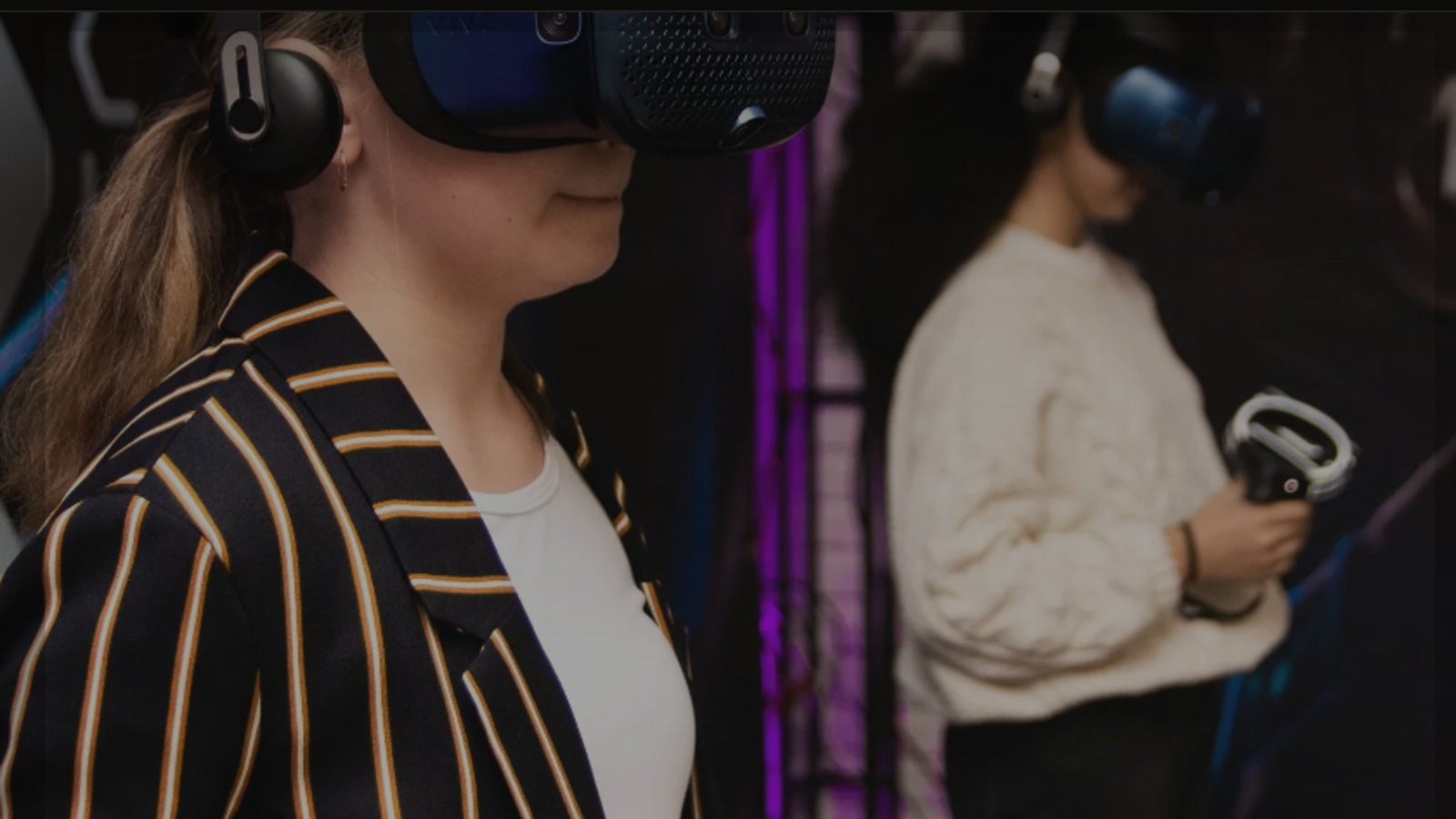
Imagine walking into a room where the walls respond to your movements, digital landscapes change as you explore, and technology makes you feel like part of a story rather than just an observer. This is the power of immersive experiences. By combining creativity, interactive displays, digital content, and advanced technologies, ordinary spaces can become engaging environments that capture attention and encourage participation.
Today, immersive experiences are finding applications across retail stores, museums, educational institutions, corporate offices, exhibitions, entertainment venues, and public spaces. Businesses and organizations are exploring new ways to connect with people, communicate ideas, and create memorable interactions. But what makes these experiences effective, and how does technology bring them to life?
What Are Immersive Experiences?
Immersive experiences are environments designed to involve people through visual, audio, digital, and interactive elements. Instead of simply viewing information on a screen, visitors can explore content, interact with digital objects, respond to visual effects, or become part of a larger narrative.
These experiences can range from a large-scale projection that transforms an architectural space to an interactive touchscreen that allows visitors to discover information at their own pace.
The goal is to create a stronger connection between people and their surroundings. When technology is combined with thoughtful design, a space becomes more than a physical location. It becomes an environment where people can explore, learn, communicate, and participate.
The Art Behind Immersive Environments
Technology provides the tools for creating immersive environments, but creativity determines how people experience them. A successful installation requires more than impressive visuals or sophisticated equipment. It needs a clear purpose, a compelling story, and an understanding of the audience.
1. Digital Storytelling That Captures Attention
Stories help people connect with information. In an immersive environment, storytelling can extend beyond words and images to include movement, sound, lighting, and interactive elements.
For example, a museum can use digital projections to recreate a historical setting, allowing visitors to understand the past through a more engaging visual experience. A retail showroom can use interactive displays to demonstrate how a product works in different environments.
When content is designed around a meaningful story, visitors have a reason to explore rather than simply look around. The experience becomes easier to understand and more memorable.
2. Visual Design That Changes How Spaces Feel
Colours, animations, lighting, textures, and motion all influence how people perceive an environment. Carefully designed visuals can make a space feel energetic, peaceful, futuristic, or educational.
Projection mapping, LED walls, and large-format digital displays can transform walls, ceilings, floors, and architectural features into dynamic visual surfaces. Instead of treating a display as a separate object, designers can integrate digital content into the overall environment.
The result is a more connected experience in which physical surroundings and digital elements work together.
3. Interaction That Encourages Participation
People often engage more deeply when they can influence what happens around them. Interactive technology allows visitors to make choices, explore different content, and receive immediate visual or audio responses.
Touchscreens, motion sensors, gesture recognition, and interactive floors can turn passive viewing into active participation.
For instance, an interactive floor in a public exhibition might respond to visitors' movements, while a touchscreen in a showroom could let customers explore product features. These interactions give people greater control over their experience and encourage them to spend more time exploring.
The Science and Technology Behind Immersive Experiences
While creativity shapes the experience, technology makes it possible. Different systems can be combined to deliver the right balance of visual quality, responsiveness, accessibility, and reliability.
Interactive Displays
Interactive displays allow users to engage directly with digital content through touch or other input methods. They are widely used in classrooms, meeting rooms, exhibitions, visitor centres, and retail environments.
Unlike conventional displays that primarily present information, interactive screens allow people to navigate menus, explore visual content, participate in activities, and access information based on their interests.
Their flexibility makes them useful for applications where user participation is an important part of the experience.
Projection Mapping
Projection mapping uses specialised projection systems to display digital visuals on surfaces such as walls, ceilings, buildings, and specially designed objects. The content is aligned with the shape and dimensions of the surface to create a coordinated visual effect.
This technology can transform an ordinary room into a changing digital environment without requiring every surface to be replaced by a physical screen.
Projection mapping is particularly useful for exhibitions, themed attractions, product launches, cultural events, and artistic installations where the surrounding architecture is part of the storytelling.
Large-Format LED Displays
LED displays can create expansive visual environments with bright images, video content, animations, and detailed graphics. When installed across walls or multiple surfaces, they can help establish a consistent visual setting.
They are commonly used in experience centres, event venues, entertainment spaces, and corporate environments where clear, impactful visuals are important.
The choice of display depends on the space, viewing distance, ambient lighting, content requirements, and the type of interaction planned.
Sensors and Responsive Technology
Sensors help digital environments respond to what people do. Depending on the installation, they may detect movement, touch, proximity, or gestures.
For example, a motion-responsive installation can change its visuals as someone walks through a room. A proximity sensor can trigger relevant information when a visitor approaches a display.
These technologies make an environment feel responsive rather than static. However, their effectiveness depends on careful calibration, appropriate placement, and reliable integration with the display and content systems.
Audio and Environmental Effects
Sound plays an important role in shaping an immersive experience. Directional audio, background soundscapes, and synchronised audio-visual content can help establish atmosphere and guide attention.
In a museum, audio can support an exhibition's narrative. In an experience centre, coordinated sound and visuals can help communicate a product concept. In a themed environment, audio can make transitions between different scenes feel more natural.
Good design also considers sound levels, accessibility, and the needs of people sharing the same space.
Where Are Immersive Experiences Making a Difference?
Immersive technology is not limited to entertainment. Its applications are expanding as organizations look for more engaging ways to communicate and interact with their audiences.
Retail and Brand Experience Centres
Retail environments can use immersive technology to help customers explore products, understand features, and visualise possible applications.
Interactive displays may allow visitors to customise product options, browse digital catalogues, or compare configurations. Large visual installations can also support brand storytelling and create a distinctive atmosphere.
The objective is to make product discovery more engaging while ensuring that the technology remains useful and easy to navigate.
Museums and Cultural Attractions
Museums can use immersive environments to make complex subjects easier to understand. Digital reconstructions, projection mapping, interactive exhibits, and audio-visual presentations can provide additional context for historical events, scientific concepts, and cultural stories.
Visitors can explore information at their own pace instead of relying entirely on static displays or written descriptions.
These technologies are most effective when they complement the exhibits and improve understanding rather than distract from the subject matter.
Education and Learning Spaces
In educational environments, interactive and immersive technologies can help explain topics that are difficult to visualise through textbooks alone.
Students may explore three-dimensional models, interact with diagrams, or observe digital representations of scientific processes. These activities can encourage curiosity and provide different ways to engage with learning materials.
The technology should support clear learning objectives, with teachers guiding students through the content and ensuring that interactive activities remain relevant.
Corporate Offices and Experience Centres
Businesses can use immersive environments to communicate ideas, present solutions, and demonstrate complex processes. Interactive displays and large visual systems can support presentations, product demonstrations, training sessions, and collaborative activities.
For organizations that work with technical or abstract concepts, visual explanations can make information easier to follow. An interactive experience centre can also bring different parts of a business story together in one coordinated environment.
Events, Exhibitions, and Public Spaces
At events and exhibitions, immersive installations can help attract attention and give visitors a reason to interact with a brand, topic, or display.
Interactive walls, digital installations, and projection-based environments can support product launches, public awareness campaigns, trade shows, and cultural events.
Because these settings often involve large audiences and changing conditions, planning must account for visitor flow, equipment reliability, content scheduling, and safe movement through the space.
How to Design an Effective Immersive Experience
An impressive installation is not necessarily an effective one. The best results come from aligning the creative concept with the needs of the audience and the practical requirements of the location.
Start with a clear objective. Decide whether the experience should educate visitors, demonstrate products, support collaboration, encourage exploration, or communicate a brand story. A defined purpose helps guide every design decision.
Understand the audience. Consider who will use the space, how much time they may spend there, and whether they will interact individually or in groups. Interfaces and activities should be accessible and easy to understand.
Choose the right technology. Interactive displays, projection mapping, LED walls, sensors, and audio systems serve different purposes. Select technologies based on the environment and the intended experience rather than choosing equipment simply because it offers advanced features.
Create content for the environment. Content designed for a small screen may not work well across an entire wall or floor. Visuals, text, animations, and interactive elements should be adapted to the display format and viewing conditions.
Plan for integration and maintenance. Displays, media players, sensors, audio equipment, control systems, and software must work together reliably. Testing, regular maintenance, and straightforward content management help keep the experience effective over time.
Measure how people respond. Depending on the purpose of the installation, useful indicators may include visitor participation, interaction frequency, time spent engaging with content, feedback, or learning outcomes. These insights can help organizations identify what works and where improvements are needed.
The Future of Immersive and Interactive Environments
Immersive technology continues to evolve as display systems, sensing capabilities, real-time graphics, and content creation tools improve. These developments are making it possible to create more responsive and flexible environments.
Artificial intelligence may help personalize content, support intelligent interactions, and simplify the management of digital experiences. Augmented and virtual reality can introduce additional ways to explore digital information, while real-time rendering can enable visual content to adapt to changing conditions.
However, technology alone will not determine the quality of future experiences. Clear communication, thoughtful storytelling, accessible design, and reliable performance will remain essential.
Organizations will also need to consider practical factors such as operating costs, content updates, user privacy, and long-term maintenance. The strongest solutions will balance innovation with real-world usability.
Conclusion
Immersive experiences bring together art, technology, and human interaction to change how people connect with physical spaces and digital content. Through interactive displays, projection mapping, LED systems, responsive sensors, and carefully designed audio-visual elements, ordinary environments can become places for exploration, learning, storytelling, and engagement.
From retail showrooms and museums to classrooms, corporate spaces, and public exhibitions, these environments offer new ways to communicate ideas and invite participation.
Ultimately, creating a memorable immersive experience is not simply about filling a space with screens or visual effects. It is about understanding what people should feel, learn, or discover and using technology to make that interaction meaningful. When creativity and engineering work together, spaces can do more than display information—they can bring ideas to life.